


4 photos. Swipe or tap a thumbnail; tap a photo to zoom.
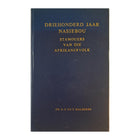


Driehonderd Jaar Nasiebou by Dr. D. F. du T. Malherbe
by Dr. D. F. du T. Malherbe
- Author
- Dr. D. F. du T. Malherbe
- Publisher
- Tegniek
- Year
- 1959
- Binding
- cloth
- Language
- Afrikaans
- Condition
- Very Good (what this means)
- Catalogue no.
- TCB-000968
Facts are taken from the listing. Where it doesn't state one, it is left out.
About this copy
Driehonderd Jaar Nasiebou (Afrikaans Register of the Afrikaner Progenitors)
A Three-Hundred-Year Genealogical Register of the Founding Families of the Afrikaner People
Bibliographic Specifications
- Title: Driehonderd Jaar Nasiebou: Stamouers van die Afrikanervolk
- Author: Dr. D. F. du T. Malherbe
- Publisher: Tegniek, Stellenbosch
- Publication Date: 1959
- ISBN: None Issued (Pre-ISBN Era)
- Binding: Publisher's blue cloth boards, gilt-lettered to the front board and spine.
- Physical Format: Octavo (8vo), thick reference volume with alphabetical genealogical entries by surname.
- Language: Afrikaans
Official Condition Report
- The Book: Very Good (VG)
- Exterior / Boards: Dark blue cloth boards with clear gilt lettering to the front board and spine. Faint scratches and light surface marks to both boards. The spine is straight and the corners appear square.
- Interior: The text block is firmly bound. The page edges are toned with some light spotting or foxing to the fore-edge and top edge. The pastedown and free endpaper show light foxing and browning spots. The text pages are clean, with no writing seen.
- The Dust Jacket: Not Present
Synopsis & Historical Value
Driehonderd Jaar Nasiebou (Three Hundred Years of Nation-Building), subtitled Stamouers van die Afrikanervolk, is an Afrikaans genealogical reference work published by Tegniek in Stellenbosch in 1959. It is a register of the progenitors of the Afrikaner people, with alphabetical entries on settler surnames, their origins, marriages and children.
The work was issued for the 50th anniversary of the Suid-Afrikaanse Akademie vir Wetenskap en Kuns and traces the ancestral families of the Afrikaner over three centuries. It extends earlier genealogical work by adding families that the Geslagsregister does not list, as well as later arrivals.
The register is still cited by genealogists as a source on the early Afrikaner families, which makes it a useful companion for family researchers, Africana collectors and students of Afrikaner heritage.
Afrikaner non-political Figures of note
-
Signed
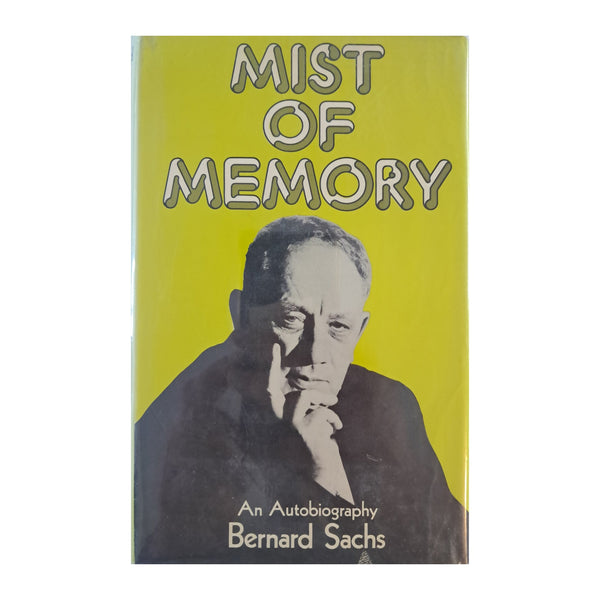
Mist of Memory by Bernard Sachs
Bernard Sachs, 1973
-

Beyers Naudé by Colleen Ryan
Colleen Ryan, 2005
-

The Collected Works of Herman Charles Bosman - Bosman, Herman Charles (author); Lionel Abrahams (foreword)
-

Farmboy and Industrialist by Albert Wessels
Albert Wessels, 1987
-

"Manna" by Annique Theron
Annique Theron
-

S. J. du Toit by P. D. van der Walt
P. D. van der Walt, 1963
-

Het Leven van Petrus Jacobus Joubert Author: J. A. Wormser (Johan Adam Wormser)
-
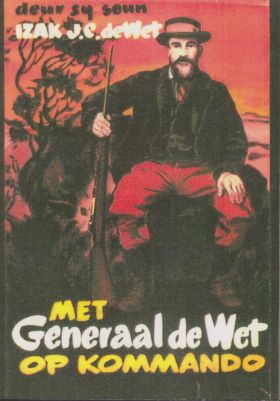
Met Generaal de Wet op Kommando Author: Izak J. C. de Wet


